Intelligent Automation and Agentic AI

DFIN Finance - DeFi and Web 3.0

Robotic Process Automation + Artificial Intelligence = Intelligent Automation

 AI  HOME
Page


BofI / AXOS Bank Build Example From Year 2000

  Ai Staff Training Example
Talk With Evans Imagine Training Staff This way. 

Call Me for Ai

Video Presentation - History of Bank Technology

Early RPA Integration At AXOS


DFIN, BofI and The Evolution of Banking

Using RPA in 2000


The Genesis of BofI: An RPA Pioneer

My Company DFIN is a digital focused company, Founded in1996,  It serves many business purposes including a personal R&D incubator. Bank of Internet USA (BofI) and DigitU were successfully spun out of DFIN. The following is the historical account of the design and launch of Bank of Internet USA (BofI) rebranded as Axos Bank in 2018. Although I originally intended to name the venture Access Bank, a specific piece of history fundamentally changed my trajectory. Today, Axos Bank continues to stand as a leader in digital banking technology. AXOS is clearly the most successful regulated and FDIC Insured digital bank.

When we opened BofI digital doors in July 2000, we faced a clear vision but an unpaved road. While I knew precisely what objectives we needed to achieve, the technical execution required a new blueprint. By mapping out the operational architecture step-by-step, our CTO and programming team successfully built the necessary infrastructure from scratch. To this day, it remains the most challenging and rewarding project of my career. I thrive on creative challenges and creating new innovations. I was the middleman between the operations team at BofI and the technology team at BofI. They both did a great job. I was able to challenge my hands on fundamental understanding of banking to change it.

The Giannini Influence

While developing the initial concept, I read Biography of a Bank, which chronicles A.P. Giannini and the founding of Bank of America. Giannini’s core strategy was elegant in its simplicity: asked by his local Italian community to establish a financial institution for them, he founded the Bank of Italy (BofI) in San Francisco in 1904. He did so specifically to serve an immigrant population that traditional banks of the era willfully ignored. Giannini eventually became an industry pioneer by branching aggressively, focusing heavily on the agricultural communities that matched his area of expertise.

By 1927, his Bank of Italy (which he frequently abbreviated as BofI) acquired a Los Angeles institution and ultimately adopted the name Bank of America. His lifelong ambition was to establish a truly nationwide branch network — a vision continuously stifled by the rigid regulatory frameworks of his time.

Giannini’s story resonated deeply with me. Being 52% Italian, I had been raised on tales of the Giannini legacy, but reading the definitive history of Bank of America reshaped my perspective on what a financial institution could achieve in the Internet era. This inspiration led to two pivotal strategic decisions:

     ·        The Brand: I chose to rename the project BofI — Bank of Internet USA.

     ·        The Focus: We centered our strategy on securing nationwide consumer deposits by targeting the senior and underserved markets, offering superior rates and terms to everyone—including small-town America.

By doing so, I set out to achieve exactly what Giannini had been denied: start with a seamless, nationwide footprint for consumer loans and deposits, entirely unconstrained by geography.

The Road to Regulatory Approval

The journey from initial concept to active operations spanned about three years of rigorous design, capital fundraising, and navigating a complex regulatory labyrinth. While a traditional brick-and-mortar bank at the time might secure regulatory approval in roughly three months, our groundbreaking model required a 14-month review process and a minimum capital requirement of $14 million. At this time, a traditional bank could have opened with $4 or $5 million in capital.

Launching into a Paper-Heavy World on a National Holiday

When BofI went live on July 4, 2000, the operating landscape was vastly different from today's digital ecosystem. Regulators and legal precedents still mandated physical "wet signatures," making deposit operations incredibly paper intensive. Platforms like DocuSign did not yet exist—and even if they had, they would not have immediately aligned with our primary target demographic: Seniors.

Contrary to prevailing market assumptions that the internet belonged solely to the young, we strategically targeted seniors. They held the core volume of stable domestic deposits and, in my experience, demonstrated the highest willingness to invest the time to secure a better financial deal. The equalizer that established immediate trust and drove them to apply was the presence of FDIC insurance. I believe USA in the name helped as well.

The RPA Revolution

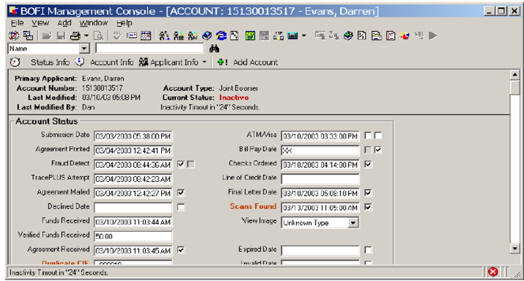
To effectively manage the intense regulatory and administrative paperwork, we engineered an in-house Robotic Process Automation (RPA) system (Exhibit B). We leveraged early automation technology to design a digital "assembly line," ensuring that no single employee was bogged down by the entirety of a manual account opening. This division of automated labor produced extraordinary operational efficiencies.

Beyond internal workflow automation, I successfully negotiated a massive departure from a few standard regulatory mandates. As an example, CRA was structured for our nationwide footprint, and  I convinced regulators that BofI had no practical need to mail monthly paper statements. Operating on a digital-first model eliminated a massive legacy cost center. The regulatory authorities worked alongside us collaboratively; they understood the shifting tides of the industry, and I believe my nearly 30-year track record of successful banking leadership provided the credibility needed to secure these historic variances.

The Results: A Quantum Leap in Efficiency

This operational model was not a theoretical exercise—it was live production running at scale in 2000. When we launched, there was no commercially available new account authorization or verification system that met our needs. The design and build were done in real time as we built volume. We required an automated solution capable of verifying every field on our deposit account applications, which led me to research skip trace software, a tool I had not needed to utilize in roughly 20 years (see Exhibit A). We had to build our own tool. This software plus our new technology build allowed us to fully automate the data verification process for all new applicants."

Where AI Would Have Accelerated Everything

We built in house, a great automated new deposit account opening system for the final years of the old Giannini banking model. Had modern Artificial Intelligence existed at the turn of the millennium, it would have amplified our architecture exponentially. With today's AI capabilities, and RPA we could have:

     ·        Eliminated manual document routing entirely through intelligent sorting.

     ·        Automated identity verification and fraud detection instantly at the point of ingestion.

     ·        Replaced the bottleneck of physical signatures with secure, biometric digital authentication.

     ·        Delivered friction-free, real-time onboarding that requires near-zero human intervention.

In short, AI would have acted as a massive force multiplier for the exact infrastructure we pioneered.

System Artifact: Below is a historical interface illustration demonstrating our proprietary customer process tracking system. This framework powered our automated reporting matrix, and future customer interactions while delivering continuous on-de

BofI RPA CRM


Exhibit A – 2026 Skip Trace Data Fields in 2026

The following are the most effective data fields and techniques used by banking skip tracers to locate individuals. This has many more fields than I used  in the past.

1 - Core Identity & Contact Fields

These fields serve as the foundation for any trace, helping to differentiate the subject from others with similar names.

  • Social Security Number (SSN): The single most accurate field for cross-referencing records across multiple databases.
  • Full Name & Known Aliases: Tracking maiden names or common misspellings reported in previous credit applications.
  • Date of Birth (DOB): Essential for verifying identity in public records where SSNs are often redacted.
  • Phone Summary: Includes current/previous landlines, wireless numbers, and Phone Confidence Indicators that verify if a number is still active or disconnected.

2 - High-Yield Location Fields

Banks prioritize "Right-Party Contact" (RPC) by looking for the most recently reported physical locations.

  • Credit Bureau Header Records: Non-financial data from credit reports (name, address history) that is updated whenever the individual applies for new credit or utility services.
  • Utility & Billing Records: Often provide more recent address updates than government records, reflecting where a person is actually living and paying bills.
  • Residential Resume (Address History): A chronological list of all known addresses, which helps identify patterns and geographic "hubs" where the individual may have returned.
  • Voters Registration: A highly reliable way to confirm or eliminate a current address, as these are often updated annually.

3 - Employment & Financial Intelligence

Locating a workplace is often more effective than a home address for establishing contact or executing legal remedies.

  • Employment Verification Traces: Utilizing services like The Work Number to confirm current payroll activity and employer locations.
  • UCC Filings: Uniform Commercial Code filings can reveal business activities and linked addresses for individuals who may be hiding personal assets but remain active professionally.
  • Professional Licenses: Searching state boards for active medical, legal, or trade licenses which must be kept current with an address of record.

4 - Advanced Associative Fields

When direct leads go cold, banks use "linking" data to find the individual through their network.

  • Relative & Associate Mapping: Identifying the contact information of co-borrowers, relatives, or known associates who may provide a "warm" lead.
  • Real Estate & Deed Records: Tracking property transfers or quitclaim deeds, which often precede a move or indicate where a subject has relocated.
  • Digital Footprints (SOCMINT): Passive monitoring of public social media profiles for location tags or employer updates that have not yet reached credit bureaus.


Exhibit B

Robotic Process Automation

"Robotic Process Automation" was first coined and entered the press in the early 2000s.

·        Early 2000s: Industry pioneers like Blue Prism first released early RPA software products around 2003.

·        2012: This was the pivotal "breakout year" when the term achieved widespread enterprise press and media coverage. Major outlets began running prominent feature pieces, such as The Economist publishing its highly cited "Rise of the software machines" article.